How do I avoid roofing scams?
Be wary of any contractor who shows up unsolicited door-to-door right after a storm, offers to waive your deductible, pressures you to sign immediately, or can't provide a permanent local address and references.
The clearest red flags are: door-to-door solicitation immediately after a storm, an offer to waive or cover your insurance deductible (which is illegal in Texas), pressure to sign a contract same-day, demands for full payment upfront, and an out-of-town or no-fixed-address business. A legitimate contractor will offer a free inspection, a written scope of work, and references without any of that pressure.
The local reality in the Texas Panhandle, South Plains, and DFW
The Texas Department of Insurance created a dedicated fraud unit specifically because of the wave of storm-chasing contractors that follow Panhandle and North Texas hailstorms. Homeowners can report suspected fraud directly to the Texas Attorney General's Consumer Protection Hotline.
Sal's experience
Sal Morales spent years working storm restoration across the country and saw the scam pattern firsthand before founding a company built as its opposite: local, permanent, and not reliant on high-pressure door-to-door sales after a storm.
Real evidence, not a sales pitch
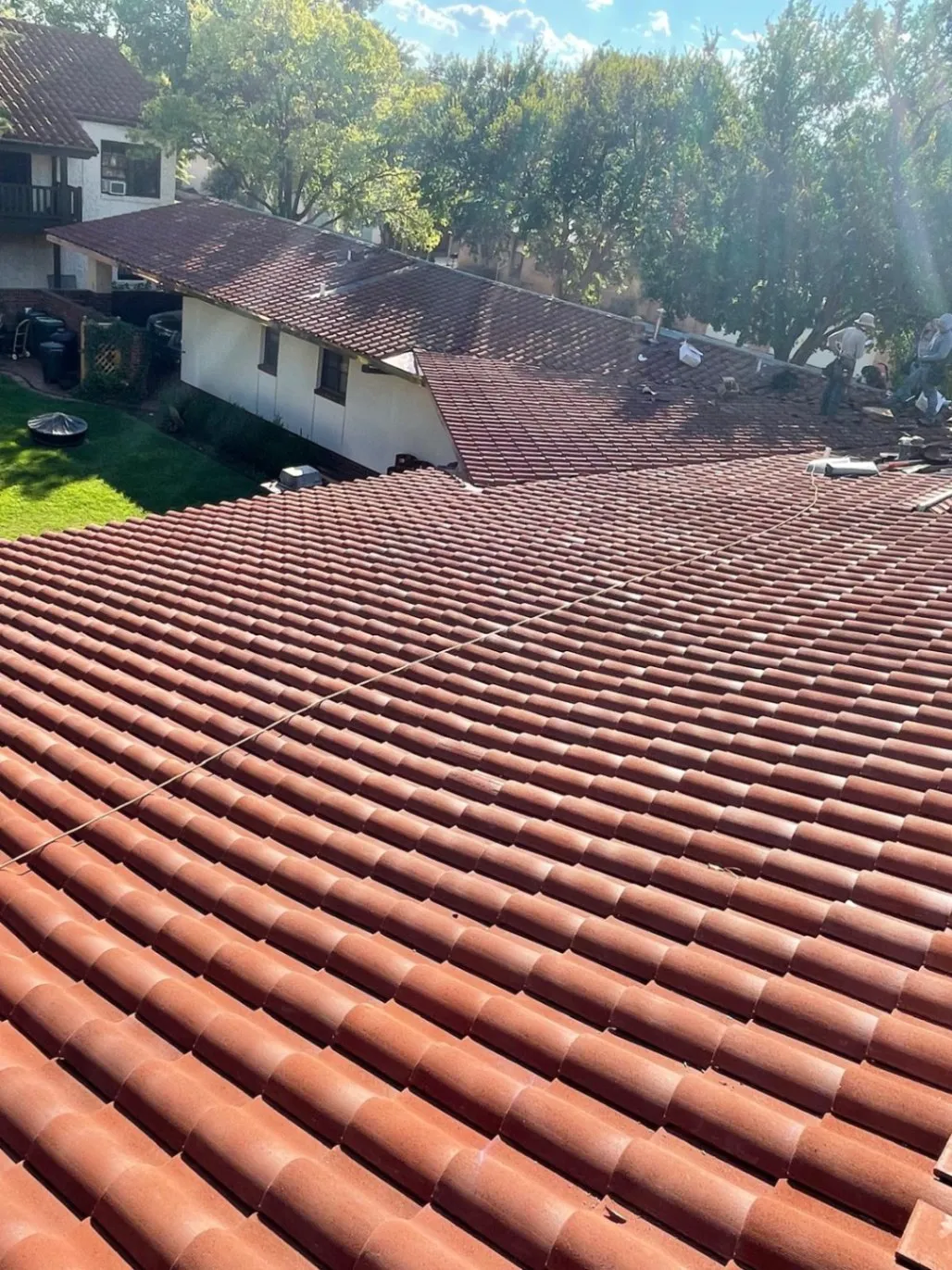
Sal Morales Roofing's own crew — permanent, local, and reachable well after storm season ends.
A written estimate with a permanent business address, a real phone number that's answered the following week, and references you can actually call — that combination is the practical test that filters out most storm-chasers.
Verify before you sign anything
Get a second opinion with a free inspection before agreeing to any roofing contract, especially right after a storm.
Common questions
Is it a red flag if a contractor offers to waive my deductible?
Yes — it's illegal in Texas for a contractor to waive, absorb, or rebate your insurance deductible, and any offer to do so is a serious warning sign.
What should a legitimate contract include?
A written, itemized scope of work, materials specified by brand and type, a payment schedule, and a permanent business address and license information.
Where do I report a suspected roofing scam in Texas?
The Texas Attorney General's Consumer Protection Hotline and the Texas Department of Insurance both accept reports of suspected contractor fraud.