How often should a commercial roof be inspected?
Twice a year on a routine schedule (spring and fall) at minimum, plus an inspection after every significant hail or wind event — the same storm-triggered principle that applies to residential roofs matters even more on commercial properties, where a delayed leak can affect business operations and tenants.
Commercial roofs should be inspected at least twice annually as routine maintenance, with additional inspections required after any major hail or wind event. Flat and low-slope commercial roofing systems are also more prone to ponding water issues that a routine visual check can catch before they become structural.
The local reality in the Texas Panhandle, South Plains, and DFW
Commercial and multi-family properties across Amarillo, Lubbock, and the DFW/Abilene corridor face the same hail and wind exposure as residential homes, but the stakes are different — a delayed commercial roof repair can mean business interruption, tenant complaints, or damaged inventory, not just a household leak.
Sal's experience
Sal Morales Roofing's commercial division applies the same storm-restoration-informed inspection standard Sal built the company on — routine schedule maintenance plus mandatory post-storm checks, rather than waiting for a tenant to report a leak.
Real evidence, not a sales pitch
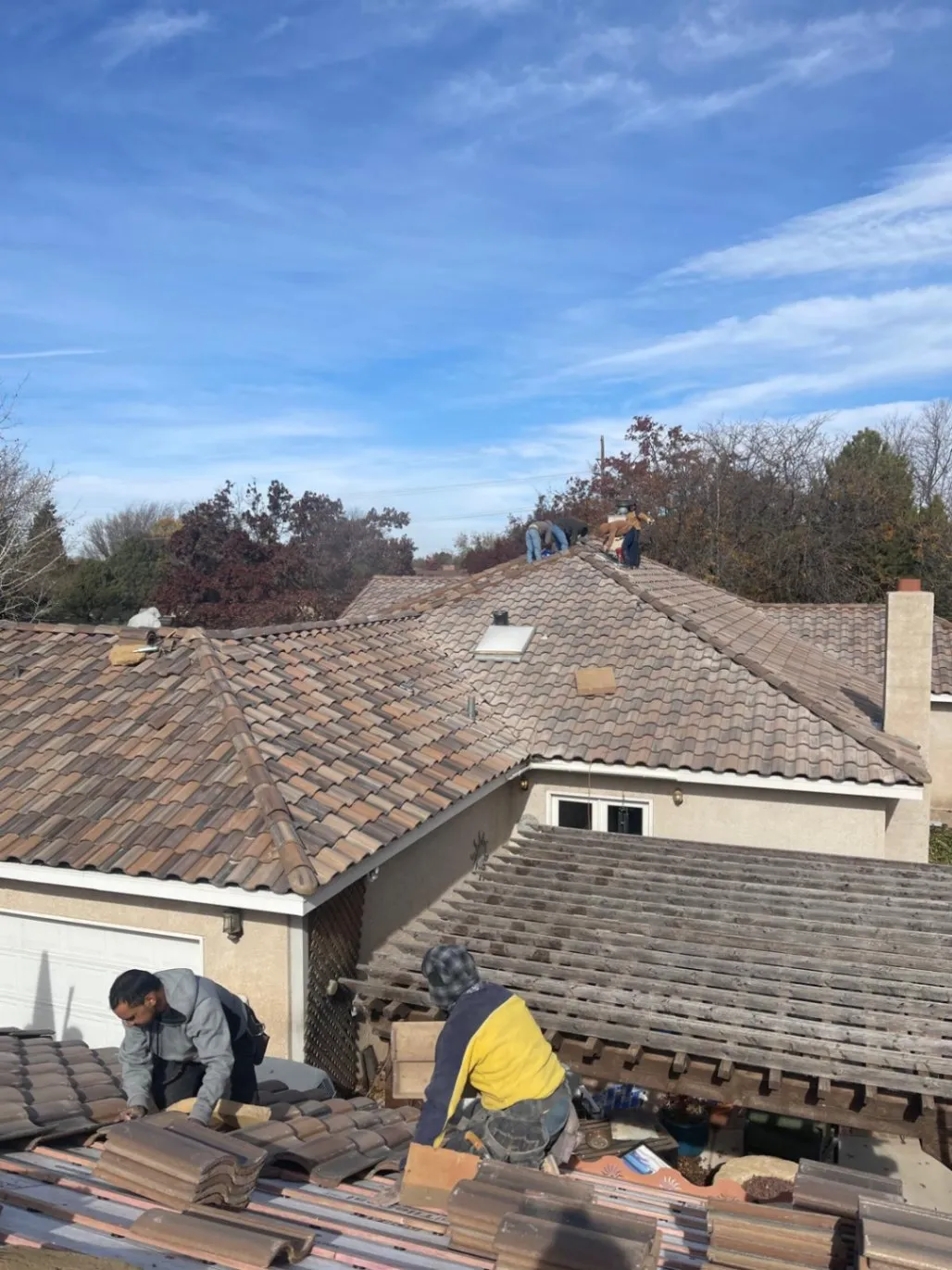
A Sal Morales Roofing crew completing an installation — the same crew standard applies across residential and commercial work.
A commercial roof inspection report that documents ponding areas, membrane seams, and flashing condition over time gives a property owner a real maintenance record — useful both for budgeting and for any future insurance claim.
Set up a commercial inspection schedule
See commercial roofing services for property owners and facility managers.
Common questions
Do flat commercial roofs need different inspections than sloped ones?
Yes — flat and low-slope systems require specific attention to ponding water and membrane seams that isn't relevant on a residential sloped roof.
Should commercial roof inspections happen after every storm?
Any significant hail or high-wind event warrants a check, given the higher cost of a delayed commercial roof failure.
Can a commercial inspection be scheduled around business hours?
Yes — commercial inspections are typically scheduled to minimize disruption to normal business operations.