Signs of hail damage you can't see from the ground
"My roof looks fine" and "my roof has no hail damage" are two different statements — and the gap between them is exactly what a ground-level look can't catch.
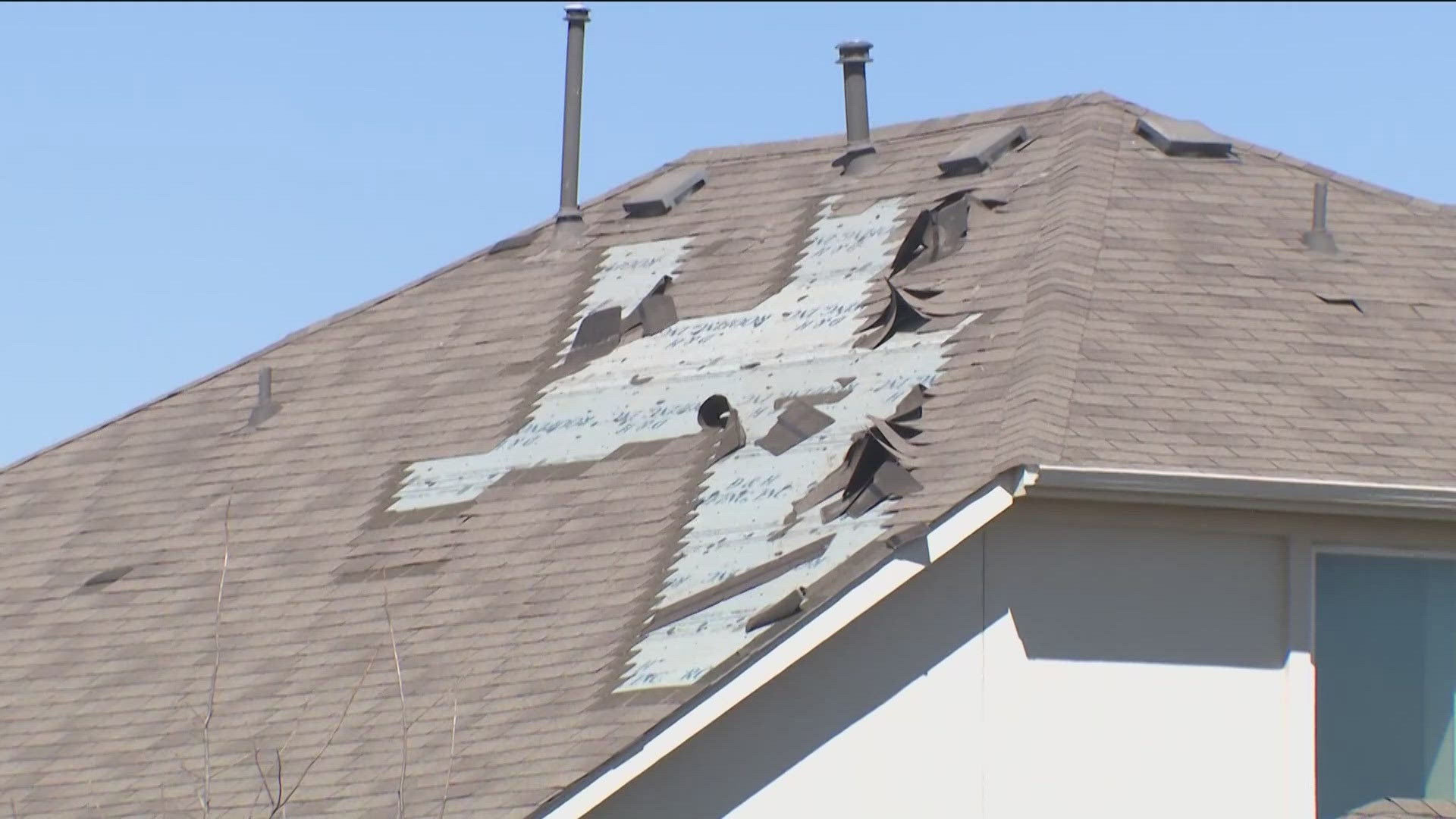
Granule loss
Asphalt shingles are coated with granules that protect the material underneath from UV and weather. Hail knocks these loose on impact — sometimes visibly, often not. Once enough granules are gone from a section of roof, that spot ages much faster than the rest, even though nothing looks obviously "broken" yet.
Bruising and soft spots
Hail impact can compress and weaken a shingle from within without cracking the visible surface. This is genuinely one of the hardest things to catch without getting on the roof and checking shingle by shingle — a bruised shingle can look completely normal from ten feet away and still be a real, developing weak point.
Cracked or split shingles
Larger hail can crack shingles outright. These are more visible than granule loss or bruising, but still easy to miss from the ground on anything but the roof's most visible slope — and a single crack on a back-facing slope is just as capable of leaking as one facing the street.
Flashing, vents, and other metal components
Flashing (the metal sealing points around chimneys, vents, and roof valleys) and vent covers are just as vulnerable to hail as shingles, and damage here often causes leaks faster than shingle damage does — but these components are small and easy to overlook entirely without a real, close inspection.
Why this all matters for insurance specifically
Insurance claims depend on documentation, and "invisible" damage still needs to be found and recorded before it can be claimed. Waiting until a leak appears means you've likely lost the ability to document the original storm-specific damage clearly, which can complicate an otherwise straightforward claim. See our insurance claim timeline guide for the full process.
Frequently Asked Questions
If I don't see any damage, is my roof probably fine?
Not necessarily — the specific types of damage described above are genuinely hard to see without a close, hands-on inspection, which is exactly why "no visible damage" and "no damage" aren't the same thing after a real hailstorm.
How long after a storm should I get an inspection?
As soon as reasonably possible — most insurance policies have filing windows, and damage left unaddressed can worsen with subsequent weather events.
Does a free inspection really cost nothing?
Yes — a legitimate free inspection costs nothing regardless of what you decide to do with the results.